

Characterizing the effect of short wavelengths on the floral flavonoid metabolome of medic. cannabis
Source / Qulle: https://link.springer.com/article/10.1007/s11306-026-02500-x Characterizing the effect of short wavelengths on the floral flavonoid metabolome of medicinal cannabis using a comparative computational metabolomics workflow Abstract Background Controlled-environment cultivation of medicinal cannabis (Cannabis sativa L.) typically optimizes light conditions to enhance the biosynthesis of pharmaceutically important metabolites like cannabinoids. Such experimental strategies may also influence other specialized metabolites like terpenoids, flavonoids, alkaloids, among others. Previous untargeted metabolomics studies testing short-wavelength conditions like UV and blue light have shown that terpenoids and prenylated flavonoids in cannabis leaves respond differentially. However, since metabolomic studies in cannabis have so far mostly focused on floral cannabinoids, a comprehensive untargeted study into cannabis’ floral metabolome response to short wavelengths is currently lack
12. August 2026
Tetrahydrocannabinol/cannabidiol in the treatment of restless legs syndrome
Source / Quelle: https://link.springer.com/article/10.1007/s00415-026-13975-y Abstract Background Dopamine agonists were previously considered the first-line treatment for Restless Legs Syndrome (RLS); however, α2δ ligands are now recommended to prevent augmentation. As cannabinoids inhibit glutamate release in the striatum, they may represent an effective therapeutic option for RLS. Objective Evaluate the efficacy of 2.7 mg Δ9Tetrahyedrocannabinol/2.5 mg Cannabidiol (2.7mgTHC/2.5mgCBD) in RLS. Methods This is an exploratory, prospective, 3-month open-label trial. At baseline, patients underwent blood testing, respiratory polygraphy, and a 14-day actigraphy. Treatment was initiated at baseline, with dose titration at week 4 if required. The Expanded Disability Status Scale (EDSS), Epworth Sleepiness Scale (ESS), International Restless Legs Syndrome Rating Scale (IRLS), Modified Ashworth Scale, and EQ-5D were assessed at baseline and at weeks 4 and 12. The 14-day actigraphy was repeated
12. August 2026
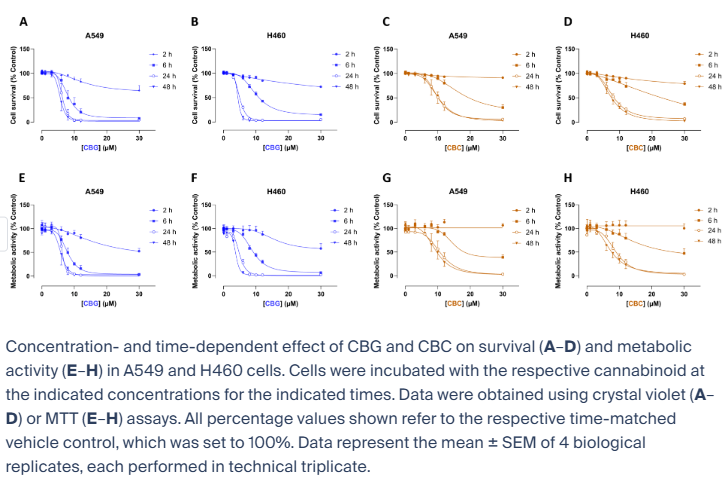
CBG and CBC Induce Lung Cancer Cell Death and Apoptosis—Contribution of PPARα to Cannabigerol Effect
Source / Quelle: https://www.mdpi.com/2076-3921/15/6/754 Abstract Cannabinoids are potential anticancer agents for the add-on treatment of malignant tumors. Here, the effects of the previously less-explored non-psychoactive phytocannabinoids cannabigerol (CBG) and cannabichromene (CBC) on survival, apoptosis, and mitochondrial function were assessed in A549 and H460 lung cancer cells. CBG and CBC triggered concentration-dependent cell death, autophagy, and mitochondrial apoptosis in both cell lines, with apoptosis indicated by Annexin V staining, activation of caspase-8, -9, and -3/7, loss of mitochondrial membrane potential, and elevated cytosolic levels of mitochondrial cytochrome c. CBG also upregulated ATF4, a stress-responsive transcription factor involved in autophagy and apoptotic signaling, and enhanced PARP cleavage. Both cannabinoids increased mitochondrial superoxide formation and reduced the mitochondrial oxygen consumption rate, with CBG additionally decreasing NDUFB8, a s
12. August 2026
CBD-Containing Topical Formulation for Localized Pain in Fibromyalgia: 12-Week Pilot Feasibil. Study
Source / Quelle: https://journals.sagepub.com/doi/10.1177/25785125261468882 Abstract Background: Fibromyalgia (FM) is a chronic pain condition characterized by widespread pain, fatigue, and functional impairment. Current pharmacological treatments show limited efficacy and poor tolerability. Cannabidiol (CBD) has demonstrated analgesic and anti-inflammatory properties, but evidence regarding CBD-containing topical formulations in FM remains scarce. Objectives: To evaluate the feasibility, safety, and preliminary efficacy of a CBD-containing topical formulation for localized pain in patients with FM and to explore its potential impact on broader symptom domains. Material and Methods: This single-arm pilot study included 30 women with FM and clinically relevant localized pain due to musculoskeletal, neuropathic, or cutaneous comorbidities. Participants self-applied a commercially available CBD-containing topical formulation to a painful area every 8 h for 12 weeks. Outcomes were assessed
12. August 2026
Effects of oral CBD supplementation on blood pressure in adults: a systematic review
Source / Quelle: https://link.springer.com/article/10.1186/s42238-026-00463-3 Abstract Background Hypertension is a leading risk factor for cardiovascular disease, particularly in ageing populations. While pharmacological interventions are common, issues with long-term adherence and side effects have prompted interest in alternative treatments. Cannabidiol (CBD), a non-psychoactive component of Cannabis sativa, has been proposed as a potential agent for blood pressure regulation due to its anxiolytic, anti-inflammatory, and vasodilatory properties. This systematic review aimed to evaluate the effects of oral CBD supplementation on blood pressure in adults with normotension and hypertension. Methods A systematic search of PubMed, Web of Science, Scopus, and Medline was conducted in September 2024. Eligible studies were randomised controlled trials (RCTs) involving oral CBD administration in normotensive or hypertensive adults, with blood pressure as an outcome. Studies involving animals
12. August 2026
Effect of cannabidiol, cannabinol and tetrahydrocannabivarin in managing inflammatory pain
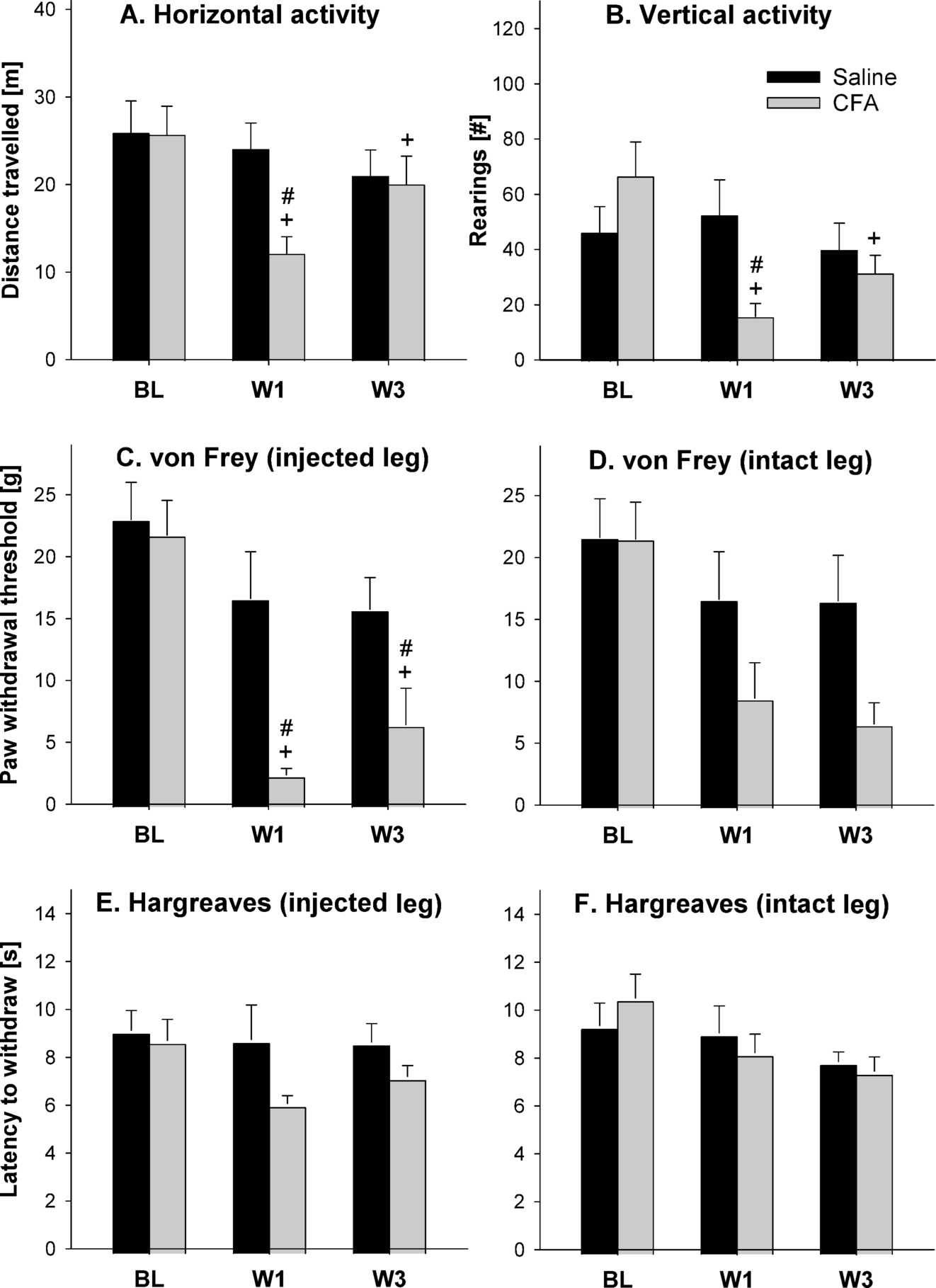
Source / Quelle: https://www.nature.com/articles/s41598-026-51275-7 Abstract Current medications used to treat the inflammatory pain either have limited effectiveness or may be associated with serious side effects. Non-psychoactive phytocannabinoids may have a better safety profile and could be used as an alternative approach to treat this condition. The aim of this study was to test the potential of three phytocannabinoids, cannabinol (CBN), tetrahydrocannabivarin (THCV) and cannabidiol (CBD), in treating inflammatory pain. The inflammatory pain was triggered in male rats by a single intra-articular knee injection of the complete Freund’s adjuvant (CFA). One week later, rats were given four daily administrations of ibuprofen, CBN, THCV or CBD. Our data demonstrated that CFA injection triggered an inflammatory response expressed as damage of the synovial tissue, reduced locomotor activity, increased mechanical and, to a lesser extent, thermal pain sensitivity, and loss of body weight.
12. August 2026