


Acute anti-proliferative and anti-migratory effects of cannabidiol
Acute anti-proliferative and anti-migratory effects of cannabidiol on C6 rat glioma, SH-SY5Y human neuroblastoma, and HT22 mouse hippocampal neuronal cell cultures Source / Quelle: https://www.frontiersin.org/journals/toxicology/articles/10.3389/ftox.2026.1727831/full Abstract Background: The treatment of central nervous system tumors remains challenging owing to their highly proliferative nature, aggressiveness, and poor prognosis. Additionally, existing treatment methods have several problems, including high risk of complications, systemic side effects, and impact on patients’ quality of life. Recently, cannabidiol (CBD), a non-psychoactive cannabinoid found in Cannabis sativa, has emerged as an alternative therapeutic medication because of its potential antitumor activity with fewer side effects. Methods: We evaluated the cell viability, clonogenicity, migration, apoptotic nuclear morphology, and cell cycle phases of C6 rat glioma, SH-SY5Y human neuroblastoma, and HT22 immortalized
7. September 2026

A Comparative Analysis of the Action Mechanisms of Cannabidiol, Cannabigerol, and Cannabinol
A Comparative Analysis of the Action Mechanisms of Cannabidiol, Cannabigerol, and Cannabinol in Human Cholangiocarcinoma Cell Lines Source / Quelle: https://www.mdpi.com/1420-3049/31/14/2446 Abstract Background: Chemoresistance remains a major obstacle in managing cholangiocarcinoma (CCA). The cannabis plant contains several phytocannabinoids, including cannabidiol (CBD), cannabigerol (CBG), and cannabinol (CBN), which exhibit anticancer properties. However, to the best of our knowledge, their effects on CCA have not been previously investigated. This study aimed to explore the molecular mechanisms underlying the anticancer effects of CBD, CBG, and CBN in CCA cells. Methods: KKU-100 and KKU-452 cells were treated with varying concentrations of CBD, CBG, and CBN for 24 and 48 h. Cytotoxicity was assessed using the MTT assay, and half maximal inhibitory concentration (IC50) values were calculated. KKU 452 cells were further analyzed for apoptosis, mitochondrial membrane potential (MMP),
7. September 2026
Cannabidiol Attenuates UVB-Induced Skin Inflammation via STAT3/c-Jun Suppression
Cannabidiol Attenuates UVB-Induced Skin Inflammation via STAT3/c-Jun Suppression and Silicone Polymer—Based Topical Delivery Source / Quelle: https://academic.oup.com/jimmunol/article/215/Supplement_1/vkag141.1792/8744636 Abstract Introduction UVB radiation induces epidermal damage and inflammatory responses through immune-mediated pathways in the skin. Cannabidiol (CBD), a non-psychoactive phytocannabinoid derived from Cannabis sativa, has demonstrated anti-inflammatory effects in various disease models; however, its therapeutic application in UVB-induced skin inflammation remains limited by poor stability and low bioavailability, largely due to oxidative and photodegradative instability. Methods This study was designed with two objectives. First, we aimed to elucidate the intrinsic anti-inflammatory mechanism of CBD in UVB-induced keratinocyte inflammation, with a particular focus on STAT3/c-Jun signaling axis. Second, we sought to evaluate a silicone polymer—based delivery strategy
1. September 2026
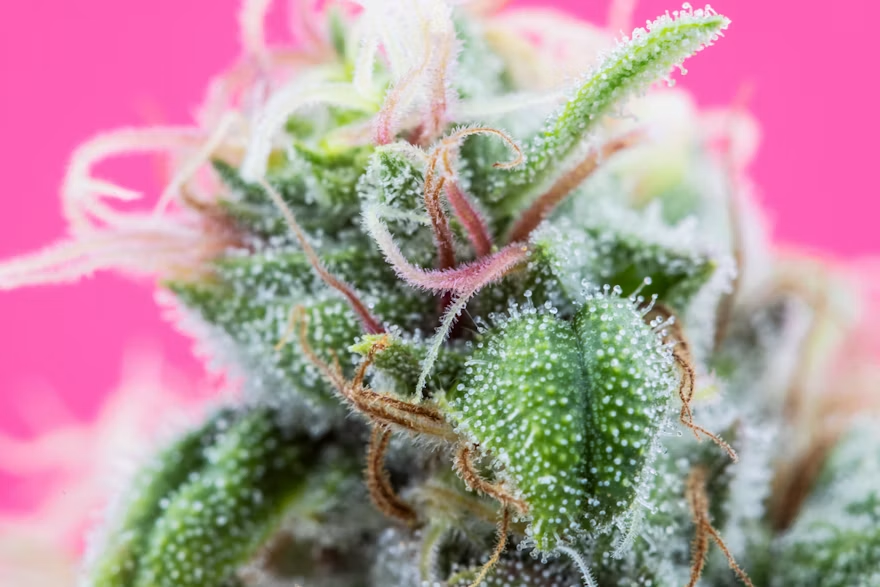
Beyond Terpenes and What The Flavor Labs Don’t Measure
Source / Quelle: https://www.cannabisbusinesstimes.com/top-stories/news/15831904/beyond-terpenes-the-emerging-science-of-cannabis-flavor?utm_source=&pu_ext_id=67070e12472a41ea097314e5 https://www.cannabisbusinesstimes.com/top-stories/news/15833368/the-flavor-labs-dont-measure-what-is-terpene-testing-missing Written by Craig Hartsough and published on Cannabis Business Times. Beyond Terpenes: The Emerging Science of Cannabis Flavor Terpenes are essential to cannabis aroma, but recent research shows flavor depends on far more than terpenes alone. Editor's note: This is Part I of a two-part series. You can read Part II, "The Flavor Labs Don’t Measure: What Is Terpene Testing Missing?" here. Terpenes are at the center of most conversations about cannabis flower tastes. The advent of terpene testing in cannabis was exciting and groundbreaking. Finally, we had a concrete way to describe why flower smells and tastes differently, and how those terpenes steer the “high.” Now that terpene testin
31. August 2026

CBD-Dominant Cannabis sativa L. Inflorescence Extract Ameliorates Atopic Dermatitis in Mice
Cannabidiol-Dominant Cannabis sativa L. Inflorescence Extract Ameliorates Atopic Dermatitis by Modulating NLRP3 Inflammasome and JAK1/STAT6 Signaling in DNCB-Induced Mice Source / Quelle: https://www.mdpi.com/2072-6643/18/14/2382 Abstract Background/Objectives: Atopic dermatitis (AD) is a chronic inflammatory skin disorder requiring sustainable therapeutic alternatives. Cannabis sativa L. is a valuable industrial crop rich in bioactive secondary metabolites; its potential as a standardized functional ingredient for promoting skin health has not yet been fully investigated. This study aimed to evaluate the therapeutic effects of a chemically characterized C. sativa inflorescence ethanol extract (CSE) on AD. Methods: To evaluate the efficacy of CSE, phytochemical profiling was performed using UPLC, and its underlying molecular mechanisms were investigated in a DNCB-induced mouse model. Results: UPLC analysis was employed to establish the phytochemical profile, identifying 15 cannabinoids
31. August 2026

Effects of CBD in comparison to hormonal therapy on estrogen decline-induced memory impairments
Effects of cannabidiol in comparison to hormonal therapy on estrogen decline-induced memory impairments and endocannabinoid system in rats Source / Quelle: https://onlinelibrary.wiley.com/doi/10.1111/jne.70234 Abstract The aim of this study was to investigate the effects of cannabidiol (CBD) on memory deficits induced by ovariectomy and to directly compare its effects with those of hormone therapy, in order to better understand potential shared mechanisms related to menopause-associated cognitive decline, with a particular focus on the endocannabinoid system. Three-month-old female Wistar rats were randomly assigned to four experimental groups: SHAM-Veh (Vehicle), OVX-Veh, OVX-E2 (estradiol), and OVX-CBD. Animals underwent either bilateral ovariectomy or sham surgery. Following a three-week recovery period, rats received daily subcutaneous injections of CBD (10 mg/kg), estradiol (10 μg/kg), or vehicle for 21 consecutive days. Behavioral assessments included object recognition and fear-
31. August 2026